
In the Maintenance World at a Ski Area, Do Vision and Mission Matter?

Vision and mission matter in the maintenance world because they turn safety and reliability values into day‑to‑day decisions that keep guests and staff safe and the mountain open. A short, practical vision inspires direction; a concise mission guides daily work, priorities, and compliance—especially important for lift maintenance as seasons approach.
Context & background
This piece builds on earlier articles in the leadership and culture series readers may have seen. It explicitly ties the six leadership questions to that series so maintenance leaders can apply the same building and culture principles in the shop. Here are links to previous posts I have written that relate to content of this post.
· “Is Your Ski Area the One You Think It Is?”
· “Changing the Culture”
· “The Crucial Role of Culture and Teams in Ski Area Leadership”
· “Elevating Leadership Dynamics in Ski Resorts — Fostering Unity and Organizational Health”
· “Can You Run a Ski Area Without People?”
Definitions (short)
- Vision statement: A brief, aspirational description of the future the organization or department seeks to create. Answers “Where do we want to be?” and inspires long‑term direction.
- Mission statement: A clear, present‑tense statement of purpose that explains what we do, for whom, and how. Answers “Why do we exist?” and guides daily decisions and priorities.
Key differences (one line each)
- Timeframe: Vision = long‑term future; Mission = present, ongoing purpose.
- Function: Vision inspires and motivates; Mission informs operations and decisions.
- Content: Vision emphasizes the desired end‑state; Mission describes activities, audience, and value delivered.
- Tone: Vision is aspirational and broad; Mission is practical and specific.
Why this is important in maintenance (practical reasons)
- Safety and risk reduction: Explicit vision/mission support a safety‑first culture, lowering accidents and liability.
- Regulatory and QA alignment: Written mission/vision help shape Quality Assurance programs and documentation (see ANSI B77 guidance on written QA for passenger ropeways).
- Operational uptime: They focus priorities—preventive maintenance schedules, spare‑parts strategy, and rapid fault response—so lifts open reliably.
- Training and competence: They justify and prioritize training investments (electrical diagnostics, ropeway systems, emergency procedures).
- Team identity and morale: Technicians who understand the “why” are more engaged, perform better, and stay longer.
- Crisis response: Clear purpose supports coordinated, rapid actions during incidents or extreme weather.
- Brand and stakeholder confidence: Demonstrates professionalism to guests, regulators, insurers, and the community.
Mapping the six leadership questions to vision & mission (with series context)
In my earlier leadership pieces, I introduced six questions leaders must answer to build clarity and culture. Below they’re shown with notes on how vision and mission should help answer them in a maintenance context.
1. Why do we exist? - Role of vision/mission: Mission answers this directly — it states the department’s core purpose (e.g., keep lifts safe and operational).
2. How do we behave? - Role of vision/mission: Resort leadership defines the guiding tone; departments translate that into shop norms and behaviors (e.g., stop‑work authority, handover discipline). My earlier articles explain how norms are developed and reinforced.
3. What do we do? - Role of vision/mission: Mission clarifies core activities (inspections, PMs, repairs) so everyone knows the department’s operational focus.
4. How will we succeed? - Role of vision/mission: Vision sets the aspirational end state; mission plus strategy (training, QA, parts, communication) defines how success will be achieved, tying back to the team‑building guidance in the series.
5. What is most important right now? - Role of vision/mission: Leadership sets seasonal and short‑term priorities; mission helps the department rank tasks (e.g., focus on PM backlog before season starts).
6. Who must do what? - Role of vision/mission: Org charts and schedules define roles; mission provides the purpose guiding assignments. Prior articles describe how role clarity reduces ambiguity and improves morale.
Good examples (short and actionable)
- Resort Vision: “To be the region’s premier mountain destination where every guest experiences safe, joyful, and unforgettable time on the snow.”
- Resort Mission: “We deliver exceptional mountain experiences year‑round by operating safe, reliable lifts and trails, offering welcoming guest services, stewarding the mountain environment, and fostering teamwork and continuous improvement.”
- Lift Maintenance Vision: “To be the trusted, industry‑leading lift maintenance team that ensures every lift opens safely and reliably — zero incidents, every day.”
- Lift Maintenance Mission: “We keep lifts safe and operational for guests and staff through expert, proactive maintenance, timely repairs, and rigorous inspections; we prioritize clear communication, continuous training, and strict compliance with safety standards to deliver dependable mountain access.”
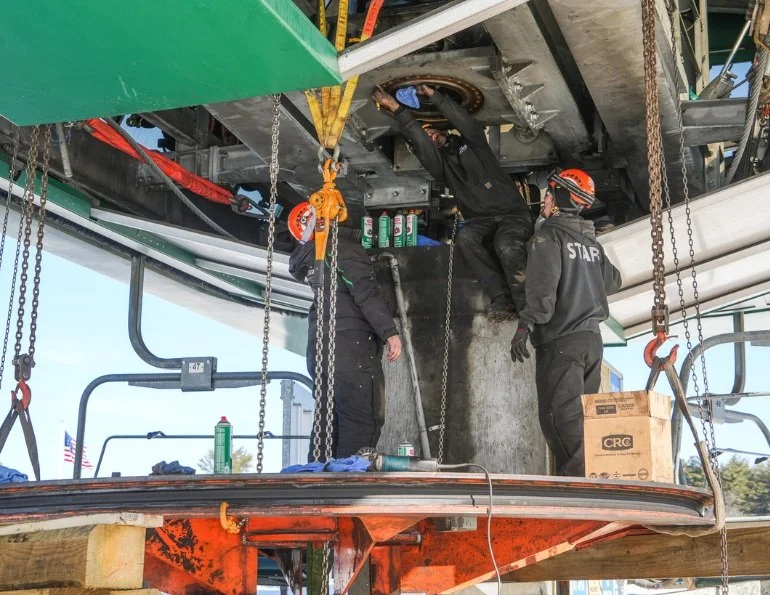
Gunstock bullwheel bearing replacement check
SAM
How to write statements that actually matter (do’s and don’ts)
Do:
- Keep them short and memorable (vision: 1 sentence; mission: 1–3 sentences).
- Use future tense for vision, present tense for mission.
- Tie wording to measurable outcomes (safety, uptime, inspection compliance).
- Involve the crew when drafting to build buy‑in.
Don’t:
- Use long platitudes alone (integrity, honesty, etc. are baseline expectations).
- Let statements sit in a binder—post and use them in daily briefings.
- Make them so generic they don’t influence operational choices.
Concrete metrics to connect mission to daily work (examples)
- Lift opening rate: % of scheduled openings achieved (target example: ≥98%).
- Preventive maintenance completion rate: % of PMs completed on schedule (target example: ≥95%).
- Mean time to repair (MTTR) for critical failures (target example: reduce MTTR by X% season over season).
- Reportable safety incidents and near‑misses (target: zero reportable incidents; track corrective actions closed).
- Inspection and audit pass rate (internal/external).
- Training hours per technician and competency sign‑offs.
Implementation checklist (practical steps)
1. Leadership alignment: Get resort and department leadership to agree on top priorities and tone.
2. Staff involvement: Run a short workshop with mechanics and electricians to co‑draft wording (see workshop agenda template).
3. Draft concise statements: Produce one vision sentence and one to three mission sentences.
4. Validate for compliance: Ensure wording supports written QA and inspection programs (e.g., ANSI B77 Section 1.5 on QA programs for passenger ropeways).
5. Approve and publish: Post in the shop, add to SOPs and onboarding materials.
6. Operationalize: Tie statements to KPIs, daily checklists, and shift handovers.
7. Review cadence: Revisit annually or every 3–5 years and before each season’s prep.
Vision and mission are not corporate fluff—they are tools that translate safety and reliability into daily priorities. Draft one short, aspirational vision sentence and one concise operational mission, post them in the shop, use them in pre‑shift talks, and tie them to three measurable KPIs. With season prep underway, now is the time to create or refresh them.