
Lift Maintenance – What Is That?
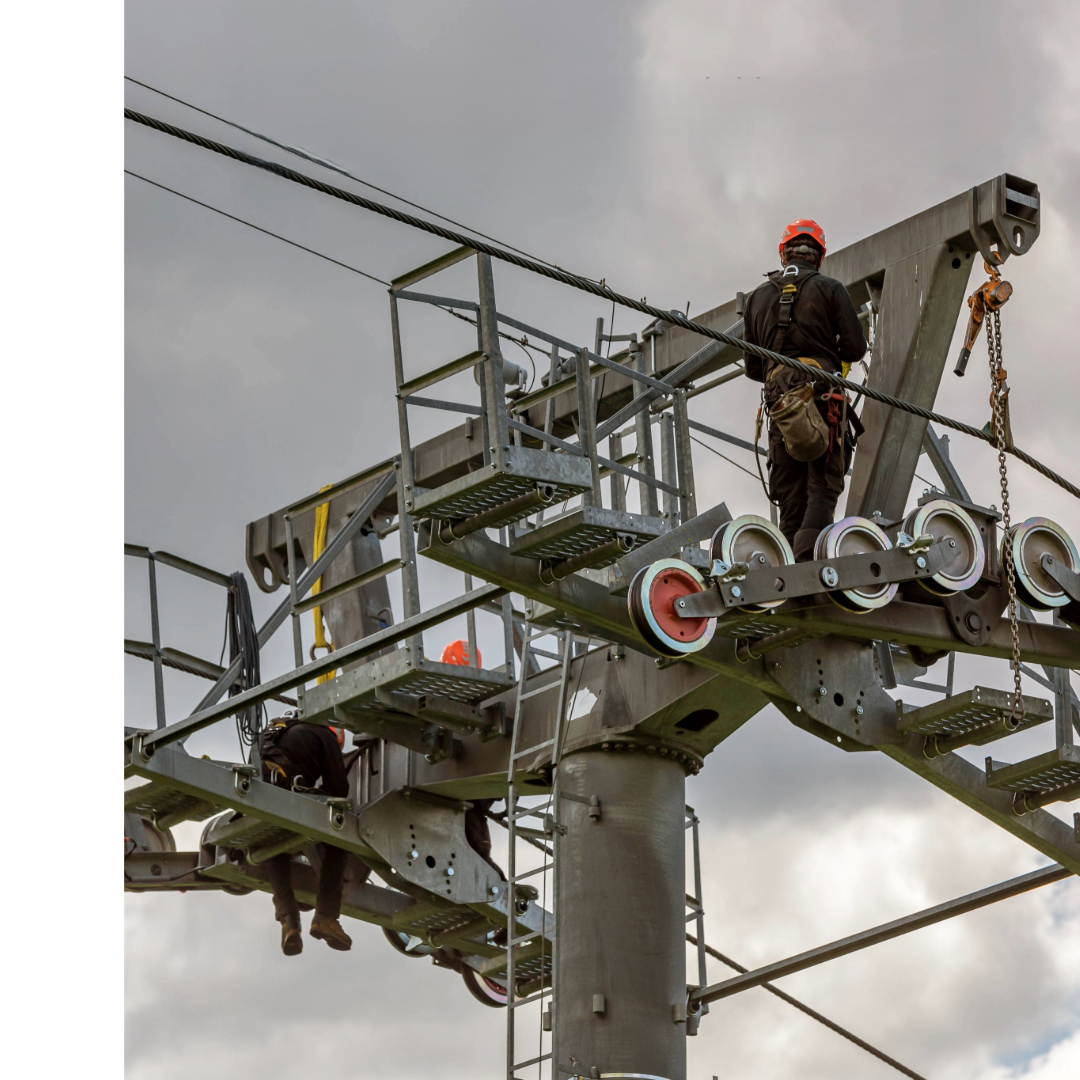
This is a rewrite of any article I wrote in 2014. I thought it would be interesting to me and I hope to you, as to what has changed in the world of Lift Maintenance. I have highlighted the changes made in this revised edition of the article.
After a winter’s run time, a lift needs to undergo an annual maintenance program, most of which is preventive, though some may involve replacing worn parts or repairing a component or system that has been problematic throughout the winter. The extent of the list is significant and, to the unfamiliar, far beyond comprehension.
In the ski business, not many outside Mountain Operations recognize the oversight directed at lifts that comes from outside the ski resort. Federal authorities in Europe and state and provincial authorities in North America. What happens in summer is often dictated by these authorities, and it is not only work but documentation of that work specifying what was done and by whom. Many a lift maintenance manager’s life is made more stressful by maintaining the paperwork than the actual electrical, electronic, and mechanical issues of a lift. Since COVID, there has been growth in the number of ski areas utilizing digital CMS systems, which can eliminate paperwork.
As demand for ski areas for more uphill capacity increases, the complexity of ski lifts grows exponentially. An old Riblet lift is straightforward and simple compared to a new detachable chair, which is controlled by computer systems and sophisticated safety systems. Add to the new 4-season demand on ski hills, and a lift maintenance tech’s summer season gets more compressed and challenging. The view from the office might be great, but work is demanding, technical, and has a high degree of precision.

In my travels, it has become apparent to me that the level of importance and respect accorded to the men and women who operate cable cars and lifts differs significantly between Europe and North America. This is my impression and from my experience. If one reviewed the SAM Marketplace classifieds today, one would find that a high percentage of jobs listed are for lift maintenance, and if one did an online search, one would find that the most common job in the ski industry is a lift maintenance technician. If someone wanted to become a lift maintenance technician, what training programs are offered? Few. This has changed as more effort is being put into place. Alterra has stepped up and developed an in-house program that would serve as a great model for the rest of the conglomerates in the industry. COVID caused an exodus from the lift maintenance field and has exacerbated the need for more experienced technicians. Online programs have been developed to get people into the field, and outreach is underway, but the need for experience remains, placing greater demand on managers and supervisors from a quality-control perspective. Many are in-house on the job; some are at technical colleges in a ski management program, but not with a concentration in lift maintenance. The Rock Mountain Lift Association was created to address the need for training and is probably the best source for in-depth, concentrated training in the USA. In comparison, if you lived in Austria and wanted to become a lift technician, you could enroll at Landesberufsschule Hallein, a 3 1/2 year program in Salzburg that has a specific, in-depth program for lift technicians, to the extent that the school has 3 complete lifts under cover in the school for students to train on. Furthermore, the culture regards being a lift technician as a profession, and there is a sense of pride in the work. We are not here yet.
There is even a difference in ski culture within North America regarding lift maintenance, and that divide is between East and West. The West generally places greater importance on lift maintenance than the East. This is reflected in training – RMLA, for example, the level of pay, and the level of management commitment to supporting the lift maintenance departments. Most telling to me in traveling for Steep has been the longevity of Western lift maintenance departments versus those in the East, and, frankly, the level of professionalism. The longevity gap is no longer present after COVID. All areas of the country are experiencing a staffing issue.
So, if I am critical, I need to offer potential solutions, which would be:
From top-level management down, there must be a commitment to respect the work these men and women do – it is vital to the success of the business – and to ensure lifts run consistently and safely – customers expect it. Gaining here, but still work to be done.
Step up the training – review your staff – what level of skills do they have? Work with suppliers to take advantage of the training they offer – explore online training for electronics and electrical skills – have in-house training, an excellent example I have seen is a lunch room with a projector used to display the subject of the day, and the staff discusses the section or component of the lift being shown – lots of positives to this method. All still applies, but there has been progress.
Make better hires – hire for attitude, desire, and ability; the skill can be acquired. If you need the skill now, still hire based on the 3 attributes of attitude, desire, and ability, and then pay accordingly for the skill. Recognize that, with the depletion of experience post-COVID, that skill has become a required hire criterion, but hopefully it doesn’t overshadow the need for attitude, desire, and ability.
Hate to say it, GMs, but pay better – compare what you pay a journeyman lift technician against what Caterpillar pays their diesel techs, the lift mechanic needs more skill and is subject to more adverse working conditions than the Cat tech. If you have the right staff, you probably need fewer staff than you have now. It doesn’t have to cost you more total dollars with the right staff. Pay has improved, but the gap between my example of the Cat tech still exists and has probably gotten broader.
Provide the tools and systems to make the work easier – let the tech be engaged in his or her work, give feedback, solicit feedback. This always applies.
Any skill hill is only as good as the snow, terrain, the lifts, and the people who make it happen. You don’t have total control over the 1st two, but you do over the last two. Build a plan today to make your lift maintenance department the best it can be.