
Many terms describe how an organization, including a ski area, should be guided: vision, mission, values, strategy, culture, and more. Which provides the right direction for your ski area? Although Vail Resorts and Mad River Glen differ significantly, I would argue that their core guidance should be similar—even if their strategies are not.
Having served as Mad River Glen’s CEO, I understand its guiding principles fairly well. Vail Resorts’ extensive press coverage also offers insight into its direction. Although my perspective is limited, I believe both ski companies are guided primarily by their vision and mission.
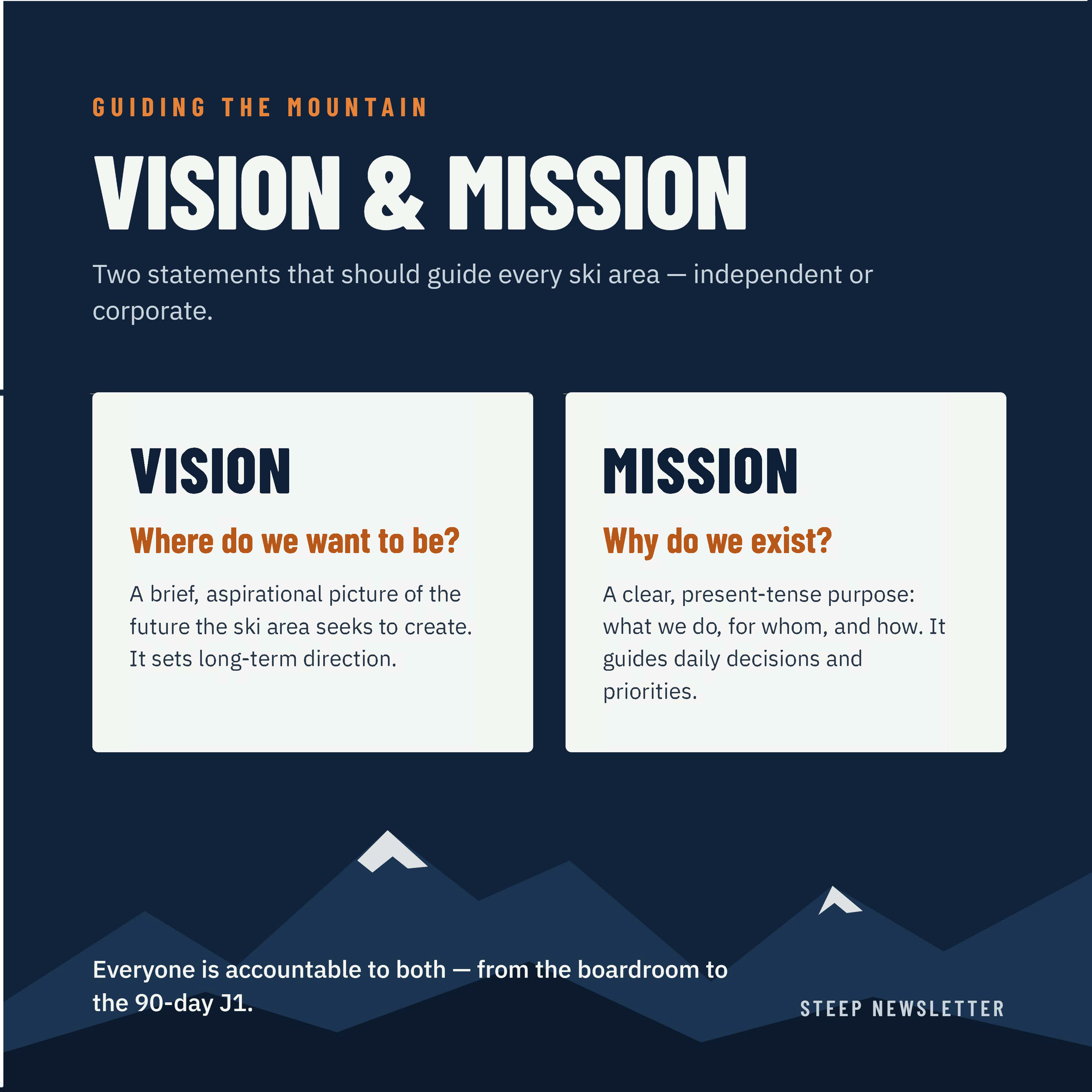
Vision statement: A brief, aspirational description of the future the ski area seeks to create. Answers “Where do we want to be?” and inspires long‑term direction.
Mission statement: A clear, present‑tense statement of purpose that explains what we do, for whom, and how. Answers “Why do we exist?” and guides daily decisions and priorities.
These are the definitions of a vision statement and a mission statement from an article I wrote in August 2026 for the August 2026 Steep Newsletter.
My point is that these two vital statements must be communicated regularly to all staff, who must see that every policy, procedure, and decision aligns with them. When staff are not consistently reminded of the vision and mission—or when organizational actions contradict them—the culture begins to deteriorate and work performance declines.
Another way to express this belief is that everyone in the organization must be accountable to the vision and mission. From the very top down to the J1 on-site for 90 days, no exceptions. In both ski areas mentioned, the boards will approve the vision and mission, as dictated by the owning stakeholders. The CEO of each ski area is primarily responsible for ensuring that all strategic programs adhere to the vision and mission statements. The CEO and leadership team should advise the board, which makes the final decision. In rare cases, when a board has determined the vision and mission on its own, the resulting goals have been unrealistic and the outcomes disastrous.
You may wonder why a former ski executive is urging ski areas to focus on these two statements. The answer is simple: if a CEO or leadership team has not established an appropriate vision and mission, and is not living up to it, a consultant would likely find a negative culture and only fair organizational health. These findings may indicate that your ski area is underperforming financially compared with competitors that have an appropriate vision and mission, while also experiencing high turnover, difficulty executing strategy, excessive internal politics, and subpar performance in skilled operations. If you want the name of someone who can assess your culture/health, let me know. I can connect you with someone who can do so.
To strengthen your ski area, take a candid look at your vision and mission. If they do not yet exist, create them. Then let the vision guide your direction and the mission shape how the ski area operates.
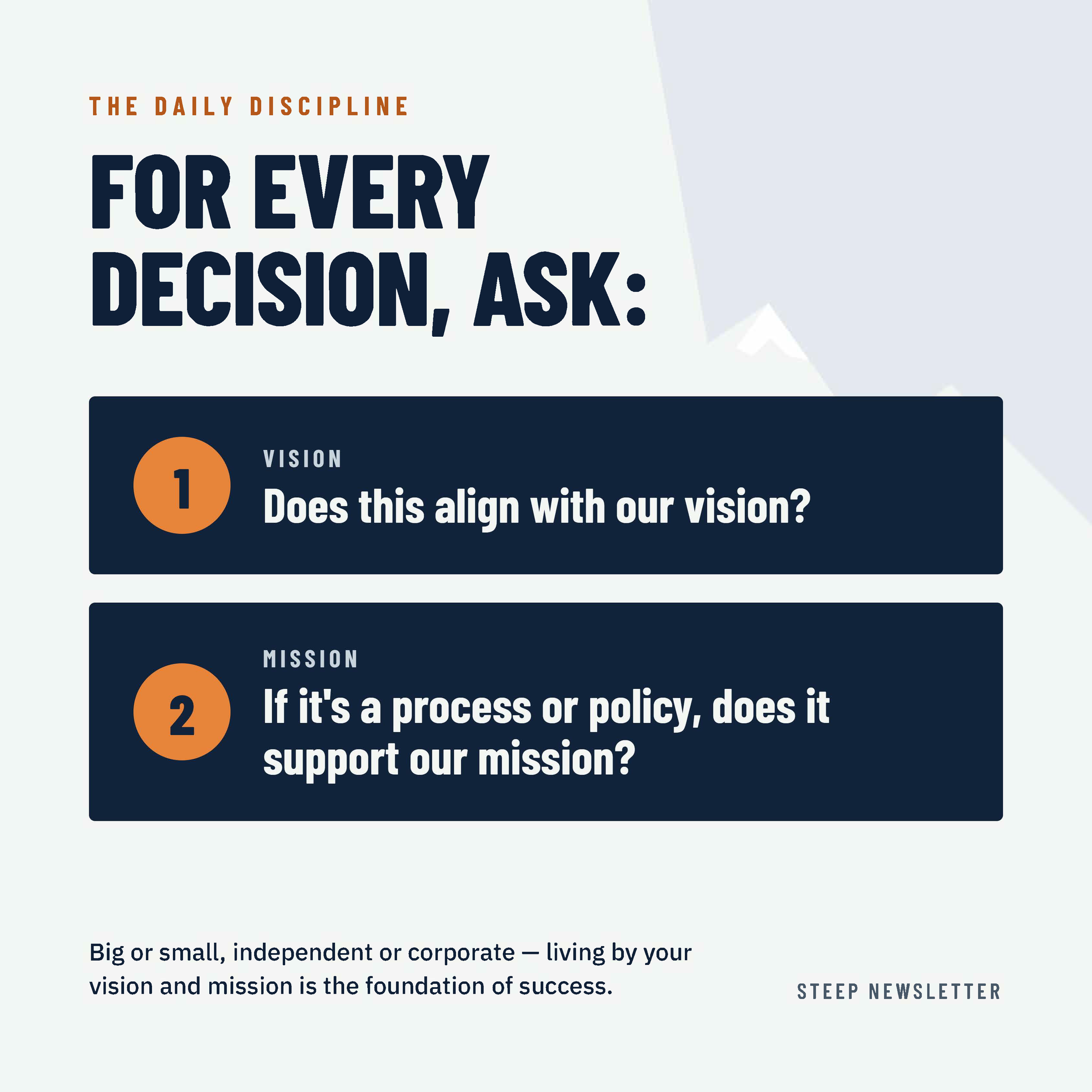
Whether big or small, independent or corporately owned, this discipline — having and living by your vision and mission statements — is the underlying component of success at your ski area.